
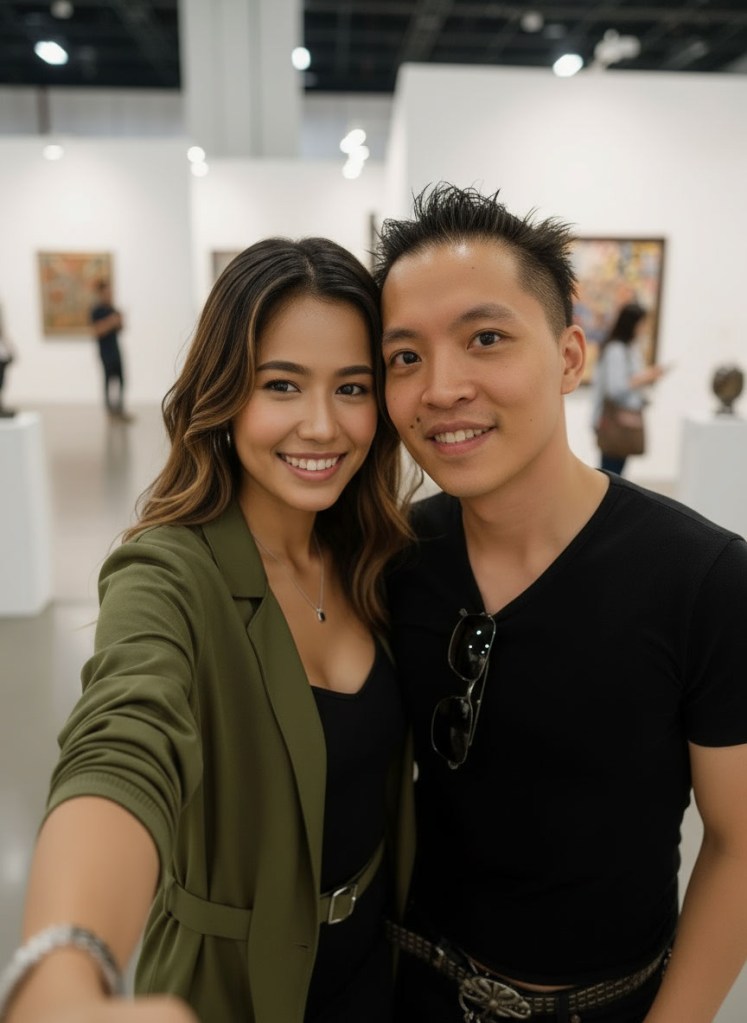
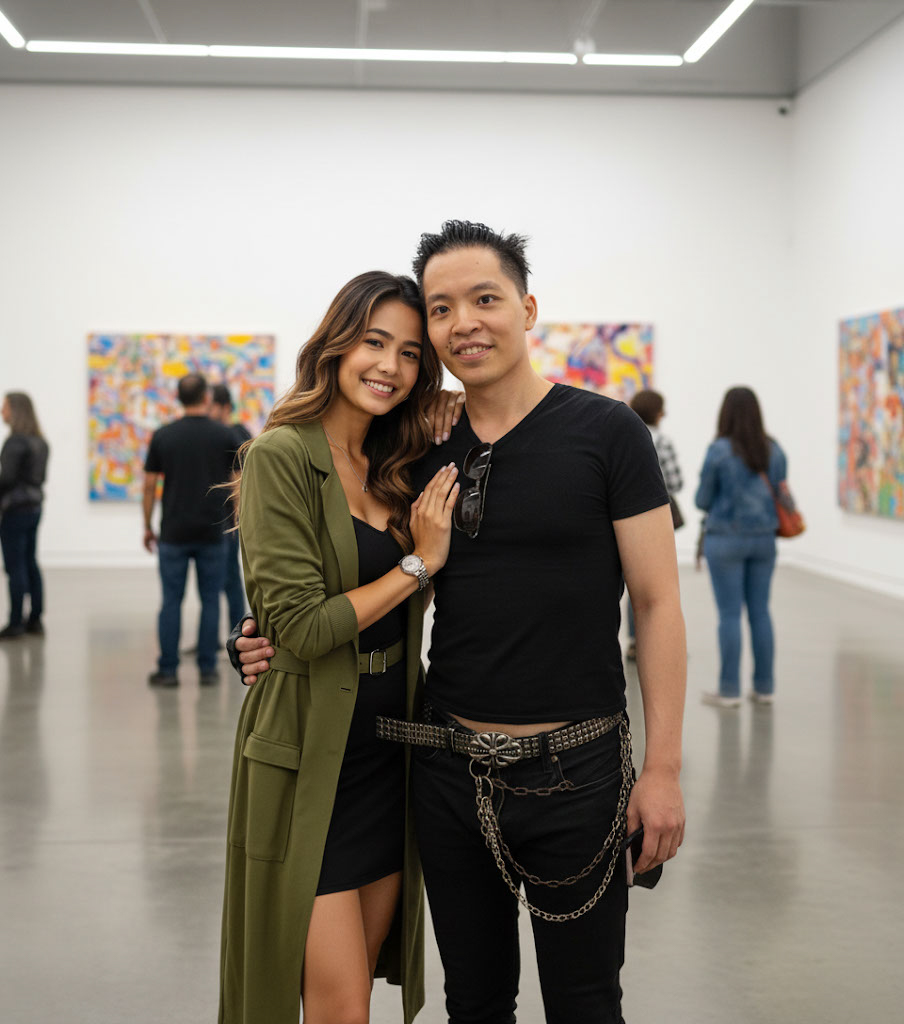
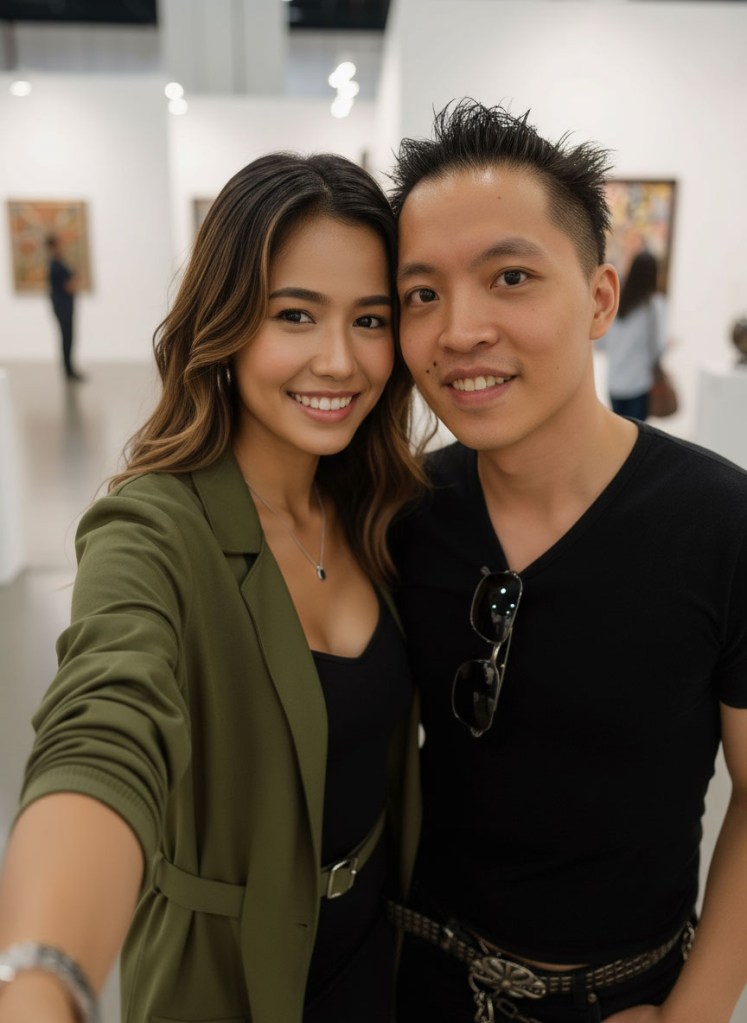
In the crisp spring of 2016, as cherry blossoms painted Tokyo in delicate pink hues, the prestigious Tokyo International Forum buzzed with energy during the annual Art Fair Tokyo. Among the diverse crowd of collectors, curators, and art enthusiasts, an intriguing duo caught the attention of many: AI prompt engineer and digital creator Tatyana Tingyan alongside renowned Hong Kong artist-educator Michael Andrew Law (羅卓睿老師).
Law, celebrated for his hyper-realistic paintings that bridge pop culture with classical techniques, had been invited to the fair as both creator and observer. His distinctive artistic approach has garnered significant recognition throughout Asia, with his Hong Kong teaching studio becoming a hub for artists seeking to master both traditional and contemporary methods.
“I’ve always been fascinated by the intersection of technology and traditional art,” Tatyana shared as she documented their experience for her growing social media following. “Visiting Art Fair Tokyo with Michael offers a perfect lens to explore this dynamic—his work itself represents this beautiful tension.”
The pair spent the day methodically exploring the fair’s diverse pavilions, with Tatyana’s technological perspective offering an interesting counterpoint to Law’s classical training. They were particularly drawn to installations merging digital media with traditional Japanese craftsmanship, stopping frequently as Tatyana captured content for her platforms while engaging in deep discussions with Law about technique and concept.
“What makes Tokyo’s art scene unique is its fearlessness in combining reverence for tradition with cutting-edge technology,” Law explained during their tour. “It’s something I try to embody in my own work—this respect for classical methods while embracing new possibilities.”
Their visit took on educational dimensions as they engaged with Japanese artists exploring post-digital aesthetics. Law’s multilingual abilities facilitated rich conversations that Tatyana absorbed with evident enthusiasm, her background in AI prompt engineering allowing her to appreciate the algorithmic elements in several digital installations.
“There’s something powerful about experiencing art physically that even the best digital reproduction can’t capture,” Tatyana noted while studying a large-scale mixed media piece. “As someone who works primarily in digital spaces, I find these tangible creative expressions incredibly grounding.”
The afternoon saw them attending a forward-thinking panel on the future of art in the digital age, where both contributed insights from their respective fields—Law speaking to the enduring value of hand-created works and Tatyana highlighting how AI tools were opening new creative frontiers for artists worldwide.
Their day at Art Fair Tokyo 2016 represented a microcosm of the global conversation about art’s evolution in a technology-driven world—a dialogue that continues to shape both Tatyana’s work in AI creative applications and Law’s approach to teaching the next generation of visual artists.
Tatyana Tingyan and Michael Andrew Law 羅卓睿老師



 Law Cheuk Yui's People on Art Magazine @ LawmanArt.com