
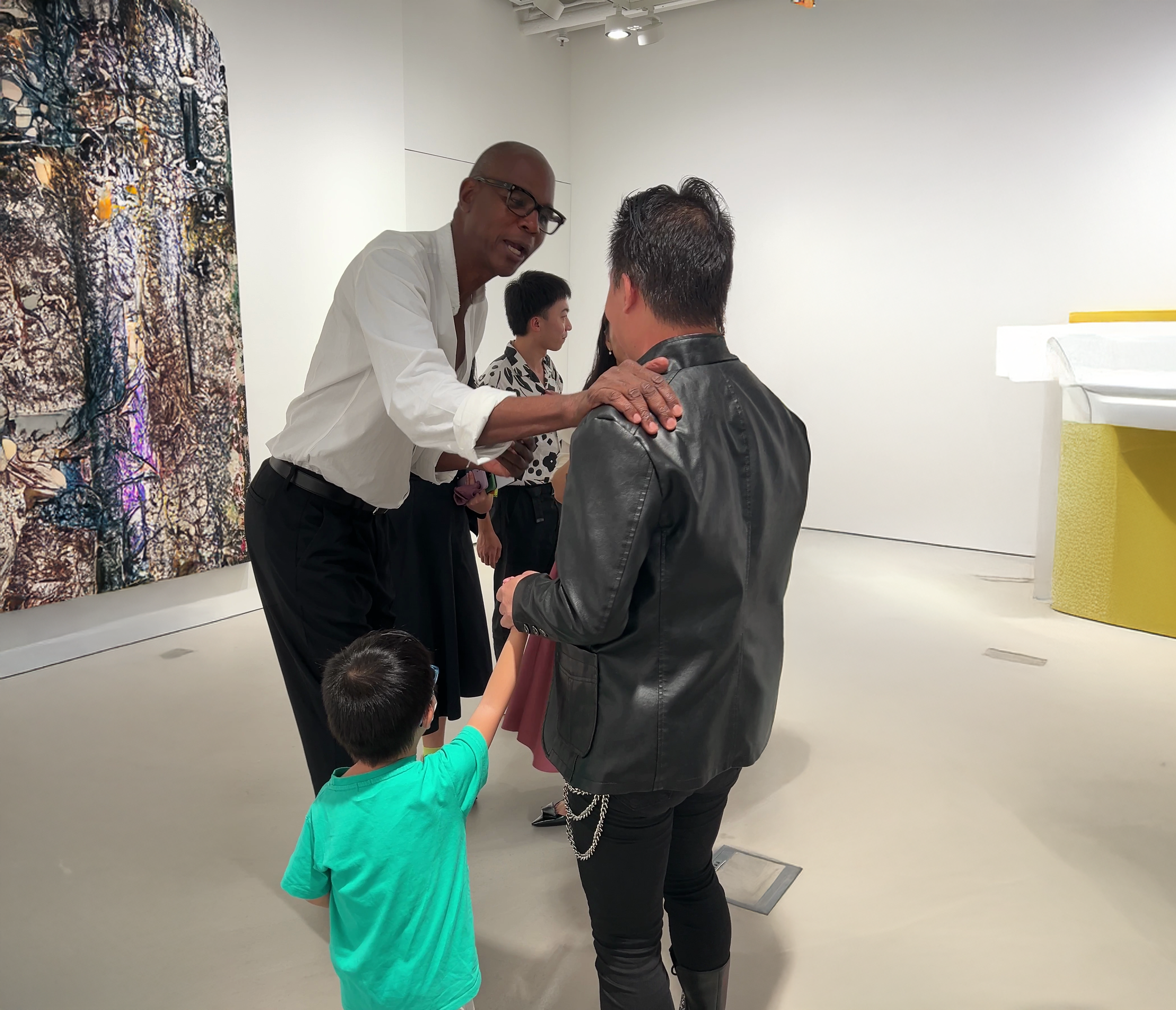
在這次難得的重逢中,羅卓睿老師與國際知名藝術家馬克·布拉德福德進行了第二次深入的藝術交流。這次會面不僅延續了兩人之前的對話,更深入探討了當代藝術的發展與社會影響力。
布拉德福德分享了他最新的創作理念:「藝術不僅是視覺表現,更是社會議題的對話平台。」他解釋道,自己如何將城市文本、社會史料與抽象表現主義融合,創造出層次豐富的大型拼貼作品。
羅卓睿特別關注布拉德福德獨特的材料運用方式。「你對日常物件的轉化令人著迷,」他觀察道,「這些作品展現了物質與記憶之間的微妙關係。」布拉德福德回應說,物料的選擇往往來自對社區歷史的深入理解。
在香港期間,布拉德福德受邀在一所教育機構舉辦了一場別具意義的講座。與學生們的互動讓他深受啟發:「香港年輕一代的創意能量令人印象深刻,他們對藝術的熱情和創新思維讓我看到了無限可能。」
談到香港的藝術生態,布拉德福德表示:「這座城市的文化氛圍既現代又傳統,這種獨特的融合為藝術創作提供了豐富的靈感來源。」他特別提到城市的垂直發展如何影響了他對空間的思考。
兩位藝術家還探討了藝術教育的重要性。布拉德福德強調:「藝術教育不僅是技巧的傳授,更是培養批判性思維和創造力的過程。」羅卓睿對此深表認同,並分享了自己在藝術教育領域的經驗。
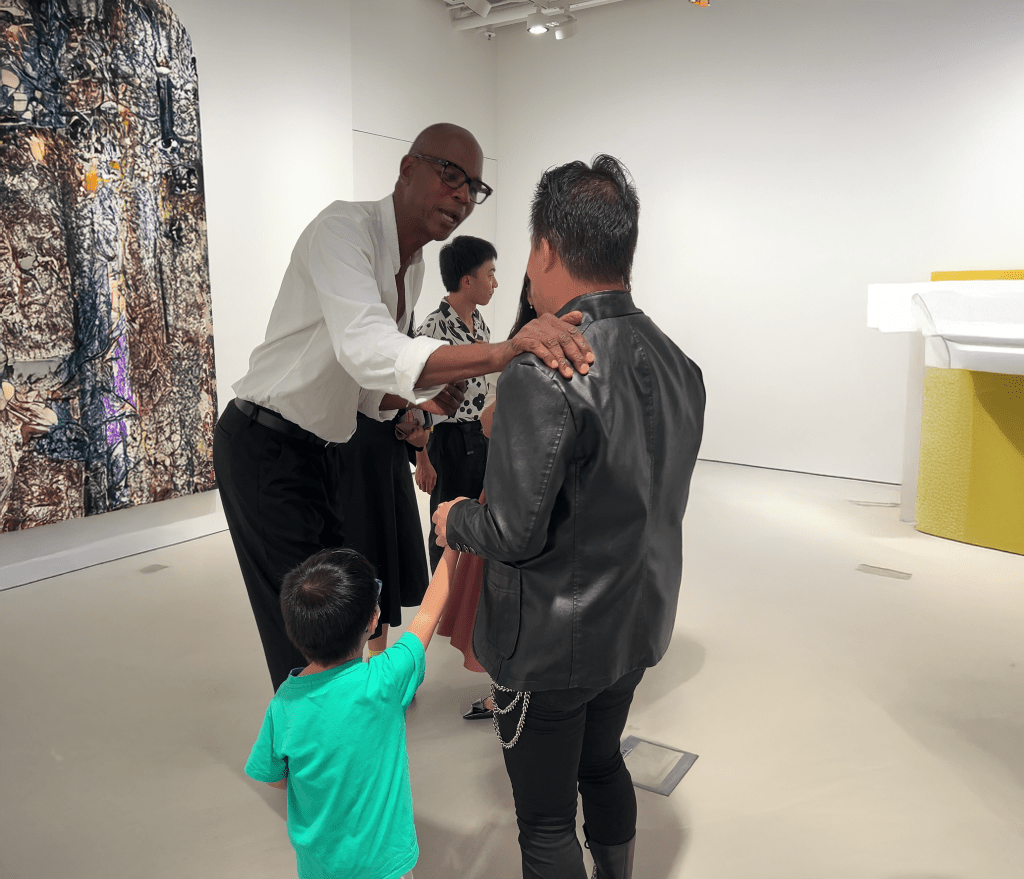
Artistic Bridges: Michael Andrew Law’s Second Dialogue with Mark Bradford
In this remarkable reunion, Michael Andrew Law engaged in a second profound artistic dialogue with internationally acclaimed artist Mark Bradford. Their meeting built upon their previous conversation while delving deeper into contemporary art’s evolution and social impact.
Bradford shared his latest creative philosophy: “Art isn’t just visual expression; it’s a platform for social dialogue.” He explained his process of integrating urban texts and social historical materials with abstract expressionism to create richly layered, large-scale collages.
Law was particularly intrigued by Bradford’s unique material applications. “Your transformation of everyday materials is fascinating,” he observed, “these works reveal the subtle relationship between materials and memory.” Bradford explained that his material choices often stem from deep understanding of community histories.
During his time in Hong Kong, Bradford conducted an inspiring lecture at an educational institution. The interaction with students left a profound impression: “The creative energy of Hong Kong’s younger generation is remarkable. Their passion for art and innovative thinking shows unlimited potential.”
Speaking about Hong Kong’s artistic ecosystem, Bradford noted: “This city’s cultural atmosphere, which blends modernity and tradition, provides rich inspiration for artistic creation.” He particularly mentioned how the city’s vertical development has influenced his spatial thinking.
The artists explored the importance of art education. “Art education isn’t just about teaching techniques; it’s about cultivating critical thinking and creativity,” Bradford emphasized. Law strongly agreed, sharing his own experiences in art education.
Their conversation extended to the role of contemporary art in addressing social issues. Bradford discussed how his work often reflects community narratives and social transformation, while Law shared his perspectives on art’s role in Hong Kong’s evolving cultural landscape.
The meeting concluded with both artists expressing optimism about the future of contemporary art and its potential to bridge cultural and social divides. Their dialogue represented not just an exchange of artistic ideas, but a deeper understanding of art’s role in contemporary society.
This second meeting between Law and Bradford reinforced their shared vision of art as a powerful medium for social change and cultural expression, while highlighting the unique perspectives each brings to the contemporary art world.
 Law Cheuk Yui's People on Art Magazine @ LawmanArt.com